
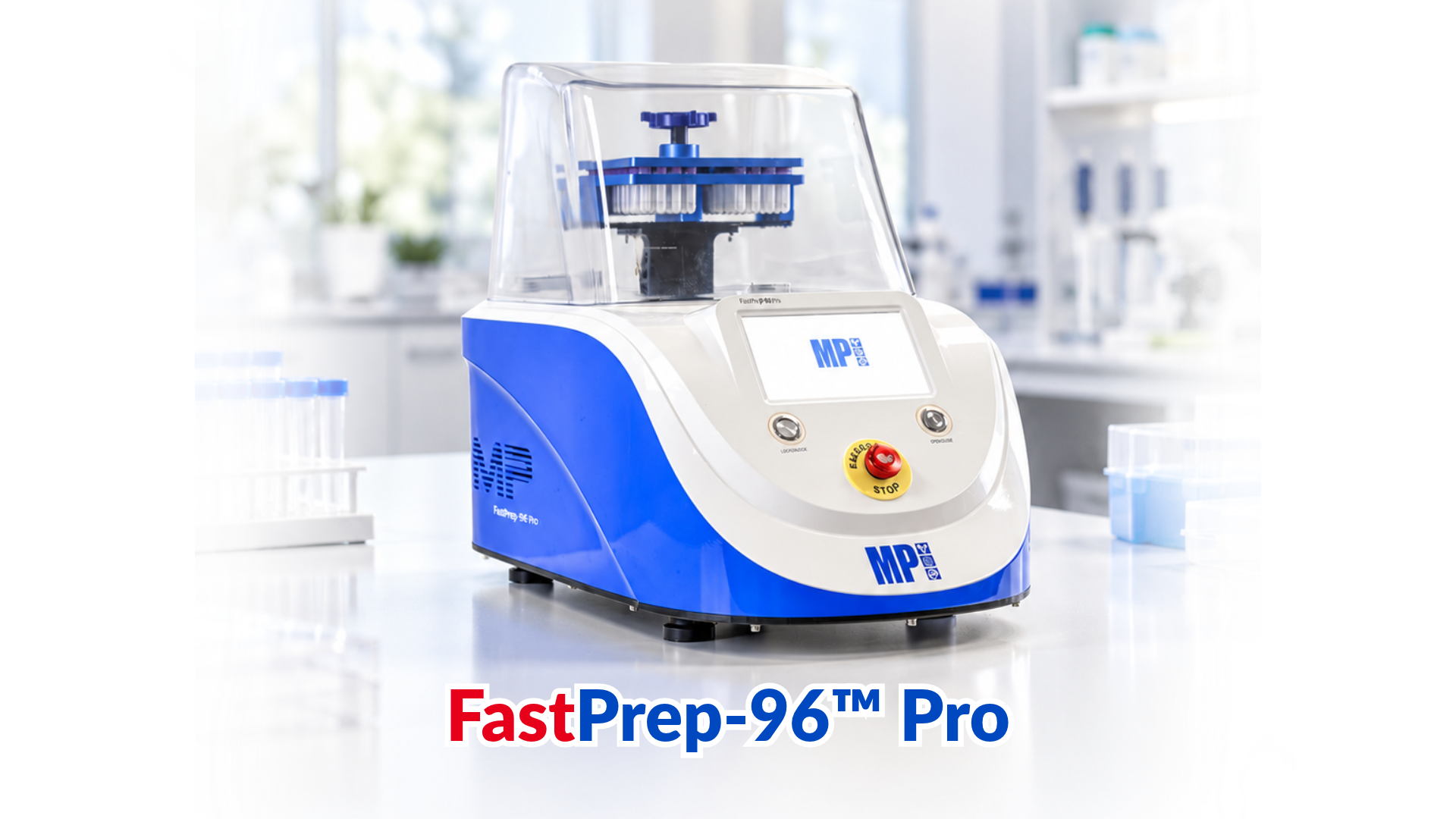
Optimizing Microbial DNA Fragmentation for Third-Generation Sequencing with FastPrep-96 Pro
Created on
An optimized FastPrep-96 Pro protocol produced more uniform microbial genomic DNA fragments for third-generation sequencing by changing the tube format and shortening each shearing cycle. Using 1.5 mL centrifuge tubes at 1,800 rpm for eight 30-second cycles with 90-second intervals reduced bubbling and inconsistent peak distribution.
Table of Contents
Case study at a glance
Application: Microbial genomic DNA fragmentation for third-generation sequencing library construction
Optimized settings: 1,800 rpm; eight cycles of 30 seconds; 90-second intervals
Target fragment range: 7-10 kb
Main outcome: Sharper, more uniform fragment peaks centered around approximately 8 kb for Samples 1 and 2 after optimization
Why is controlled DNA fragmentation important for third-generation sequencing?
Third-generation sequencing platforms, including PacBio SMRT and Oxford Nanopore, use high-molecular-weight DNA to support long-read sequencing without PCR amplification. Reliable library preparation therefore depends on controlled fragmentation that produces a suitable and reproducible DNA size distribution.
Dedicated shearing systems such as the Megaruptor and g-TUBE can be effective, but consumable costs may limit large-scale processing. This study evaluated the FastPrep-96 Pro as a higher-throughput, cost-efficient option for shearing microbial genomic DNA to a target range of 7-10 kb.
Study objective and materials
The study evaluated the fragmentation efficiency of the FastPrep-96 Pro for third-generation sequencing DNA shearing. Microbial genomic DNA was processed using the FastPrep-96 Pro, 0.2 mL PCR tubes and 1.5 mL centrifuge tubes. Fragment size was assessed using the Qsep100 system.
What was the initial FastPrep-96 Pro configuration?
The initial test used DNA at 10 ng/µL in a 50 µL sample volume inside a 0.2 mL PCR tube. The FastPrep-96 Pro was operated at 1,800 rpm for five 60-second cycles with 90-second intervals.
Two issues were observed. Bubbling occurred in the 0.2 mL tubes, potentially related to low DNA purity, and fragment analysis showed double peaks. The inconsistent distribution may have resulted from insufficient mixing or excessive cycle duration.
How was the DNA shearing protocol optimized?
The protocol was adjusted in two ways. First, the samples were transferred to 1.5 mL centrifuge tubes to reduce aeration and bubbling. Second, the number of cycles was increased while the duration of each cycle was reduced.
Optimized protocol
Tube: 1.5 mL centrifuge tube
Speed: 1,800 rpm
Cycle program: Eight cycles of 30 seconds
Interval: 90 seconds between cycles
DNA fragmentation results
Initial microbial genomic DNA peak sizes ranged from 9,748 to 12,531 bp. Before optimization, post-shearing peaks ranged from 7,653 to 9,843 bp. After optimization, Samples 1-7 produced peak sizes from 8,040 to 9,956 bp, while Sample 8 was recorded as an outlier at 1,594 bp.
| Sample | Initial peak (bp) | Before optimization (bp) | After optimization (bp) |
|---|---|---|---|
| 1 | 10,899 | 8,197 | 8,220 |
| 2 | 11,221 | 9,160 | 8,040 |
| 3 | 10,823 | 9,101 | 8,387 |
| 4 | 11,042 | 8,901 | 8,824 |
| 5 | 11,526 | 8,708 | 9,956 |
| 6 | 11,153 | 7,653 | 8,578 |
| 7 | 12,531 | 8,754 | 9,179 |
| 8 | 9,748 | 9,843 | 1,594 |
Data note: The source case study lists Sample 8 at 1,594 bp after optimization. This value differs from the reported 7-10 kb target range and should be treated as an outlier or verified against the original laboratory record.
What did the electrophoresis and fragment profiles show?
Electrophoresis showed a single, sharp, high-intensity band across all lanes, indicating that the starting DNA was intact and had a high degree of integrity.
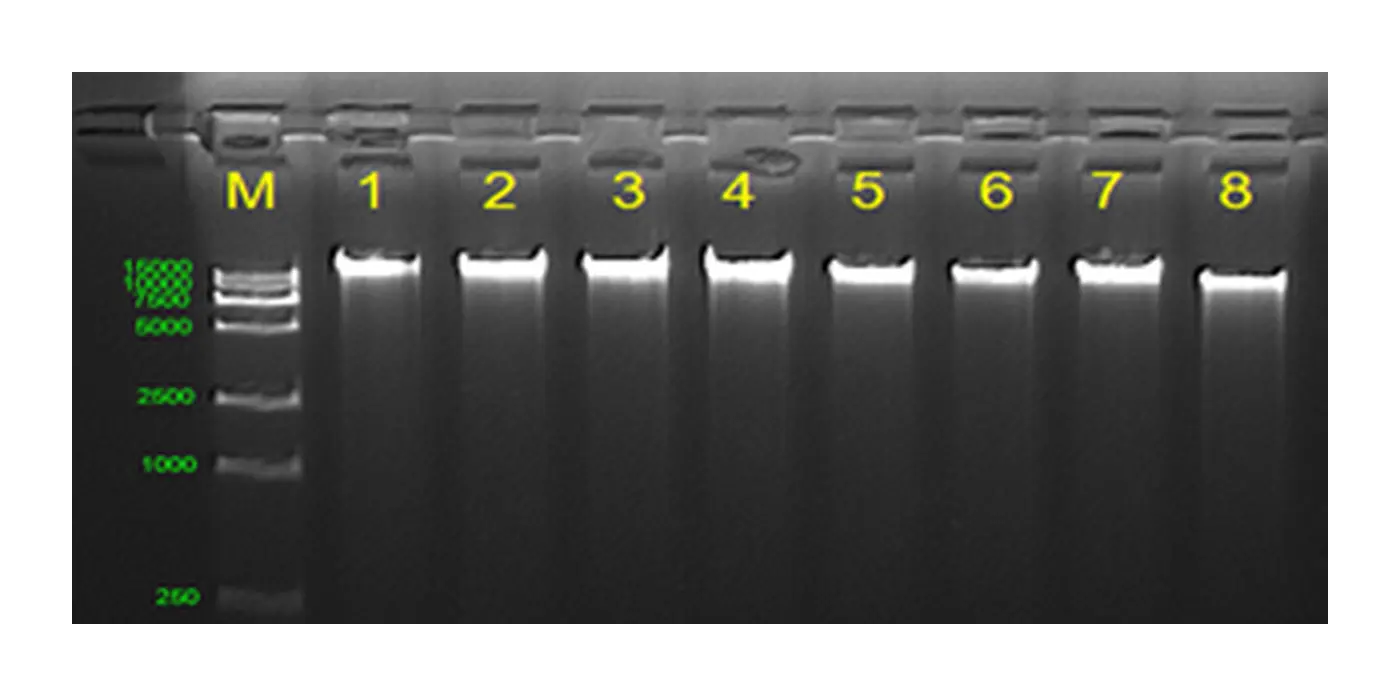
Electrophoresis showing intact microbial genomic DNA across Samples 1-8. Click the image to view it at full size.
For Samples 1 and 2, pre-shearing electropherograms displayed broad high-molecular-weight peaks around 10-11 kb. Before optimization, the post-shearing peaks shifted to approximately 8-9 kb but remained broad or included minor secondary peaks. After optimization, the peaks became sharper and more uniform, centered near 8 kb.
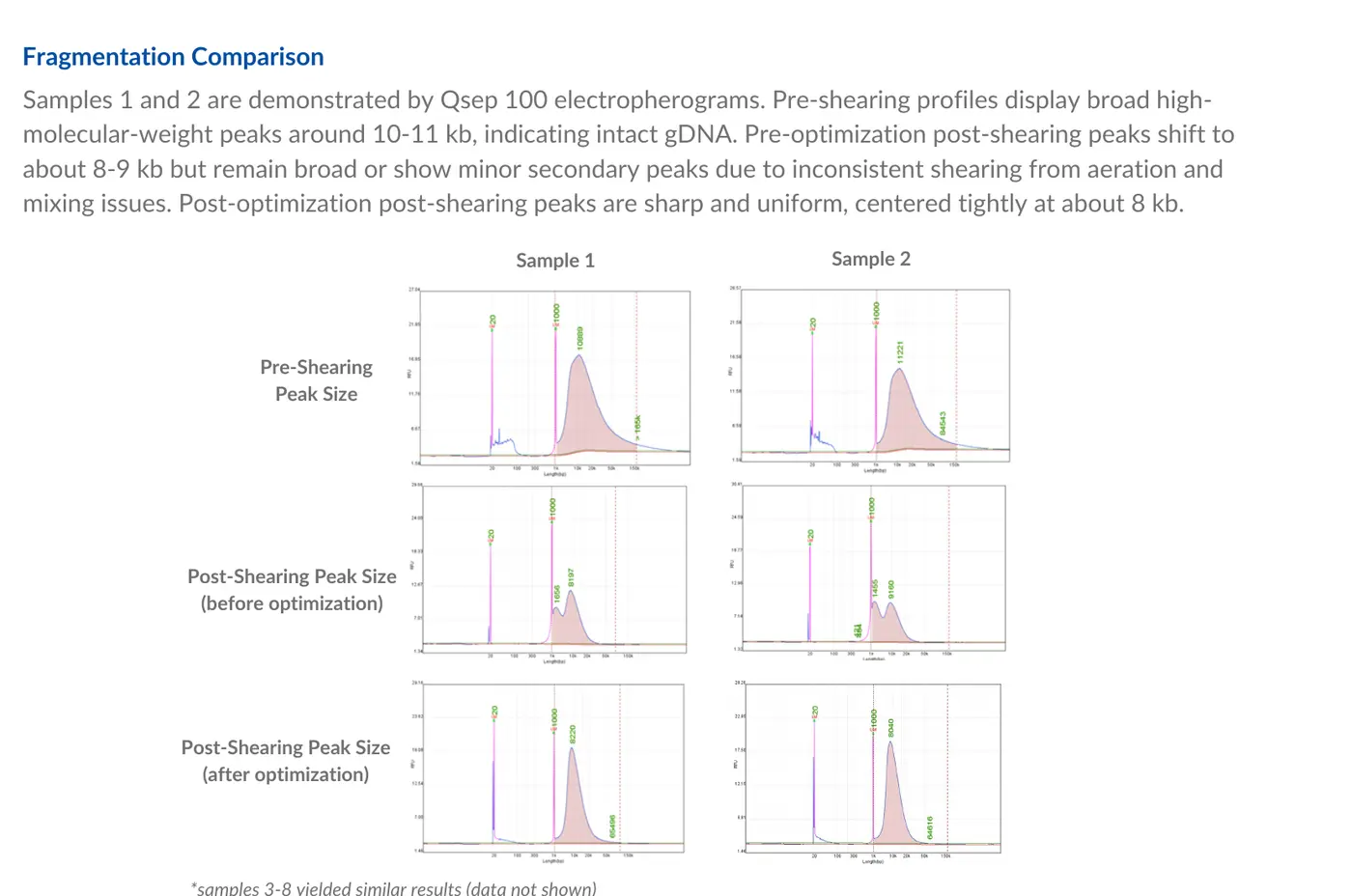
Qsep100 profiles showing sharper and more uniform fragment peaks after protocol optimization. Click the image to view it at full size.
Conclusion
Changing from 0.2 mL PCR tubes to 1.5 mL centrifuge tubes and using shorter, more frequent cycles improved the consistency of microbial genomic DNA fragmentation. The optimized FastPrep-96 Pro protocol delivered tight fragment distributions suitable for third-generation sequencing workflows in the demonstrated samples.
The results support the FastPrep-96 Pro as a high-throughput option for controlled DNA shearing, with the potential to reduce per-sample costs compared with dedicated shearing instruments. Laboratories should confirm the protocol with their own sample types, DNA purity and downstream library requirements.
Frequently asked questions
What DNA fragment size was targeted?
The target fragment range was 7-10 kb for microbial genomic DNA used in third-generation sequencing library preparation.
What were the optimized FastPrep-96 Pro settings?
The optimized protocol used 1,800 rpm for eight 30-second cycles with 90-second intervals in 1.5 mL centrifuge tubes.
Why were 1.5 mL centrifuge tubes used?
The larger tube format was introduced to reduce aeration and bubbling observed in the initial 0.2 mL PCR tube setup.
Can the FastPrep-96 Pro support long-read sequencing workflows?
In this case study, the optimized protocol produced more uniform microbial DNA fragment distributions that were suitable for the targeted third-generation sequencing workflow. Sample-specific validation is still recommended.
Should the same protocol be used for every microbial sample?
No. DNA purity, concentration, sample type and downstream library requirements can affect fragmentation. The protocol provides a starting point and should be validated for each laboratory workflow.
Explore the FastPrep-96 Pro
Learn more about high-throughput sample preparation and the FastPrep-96 Pro from MP Biomedicals.
Source: MP Biomedicals APAC case study, revision April 2026.
Move Your Research Workflow Forward
Explore relevant MP Biomedicals solutions or connect with our team for product selection, samples, quotations and technical guidance.