
New Study Highlights the Importance of Reproducible Workflows in Gut Microbiome mNGS
Created on
A new study published in Scientific Reports on 11 October 2026 highlights a challenge that continues to affect gut microbiome research: achieving reproducible results across the full metagenomic next-generation sequencing (mNGS) workflow.
The study evaluated an integrated workflow covering sample preservation, inhibitor removal and nucleic acid extraction, with the aim of reducing technical variability before sequencing. The researchers reported strong intra- and inter-batch reproducibility, including high inter-operator correlation, while also showing that preservation conditions and extraction steps can influence the resulting microbiome profile.
Overall Workflow Diagram
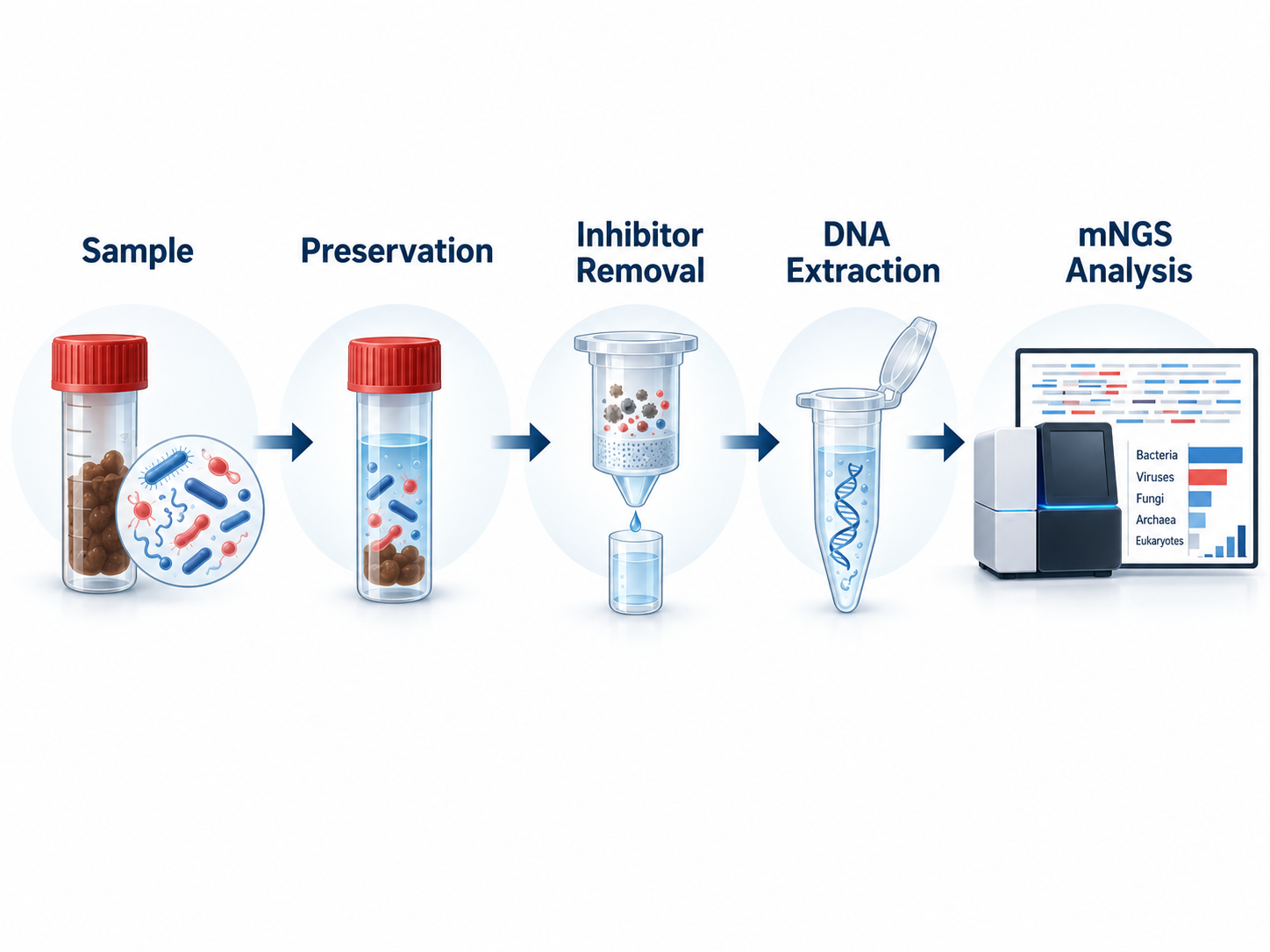
Table of Contents
Why pre-analytical consistency matters
In microbiome studies, variation can be introduced long before sequencing begins. Sample preservation, cell lysis, inhibitor removal and DNA extraction can all affect the quantity, quality and representativeness of recovered nucleic acids.
This is especially important for complex samples such as stool, where difficult-to-lyse microorganisms and PCR or sequencing inhibitors can create bias. If these upstream steps are not standardized, technical variation may be mistaken for biological variation.
What the study found
The researchers compared three preservation buffers and evaluated an inhibitor-removal approach for automated DNA extraction. One preservation condition showed the closest fidelity to the original microbiome composition, while another demonstrated stronger stability during extended incubation at 37°C.
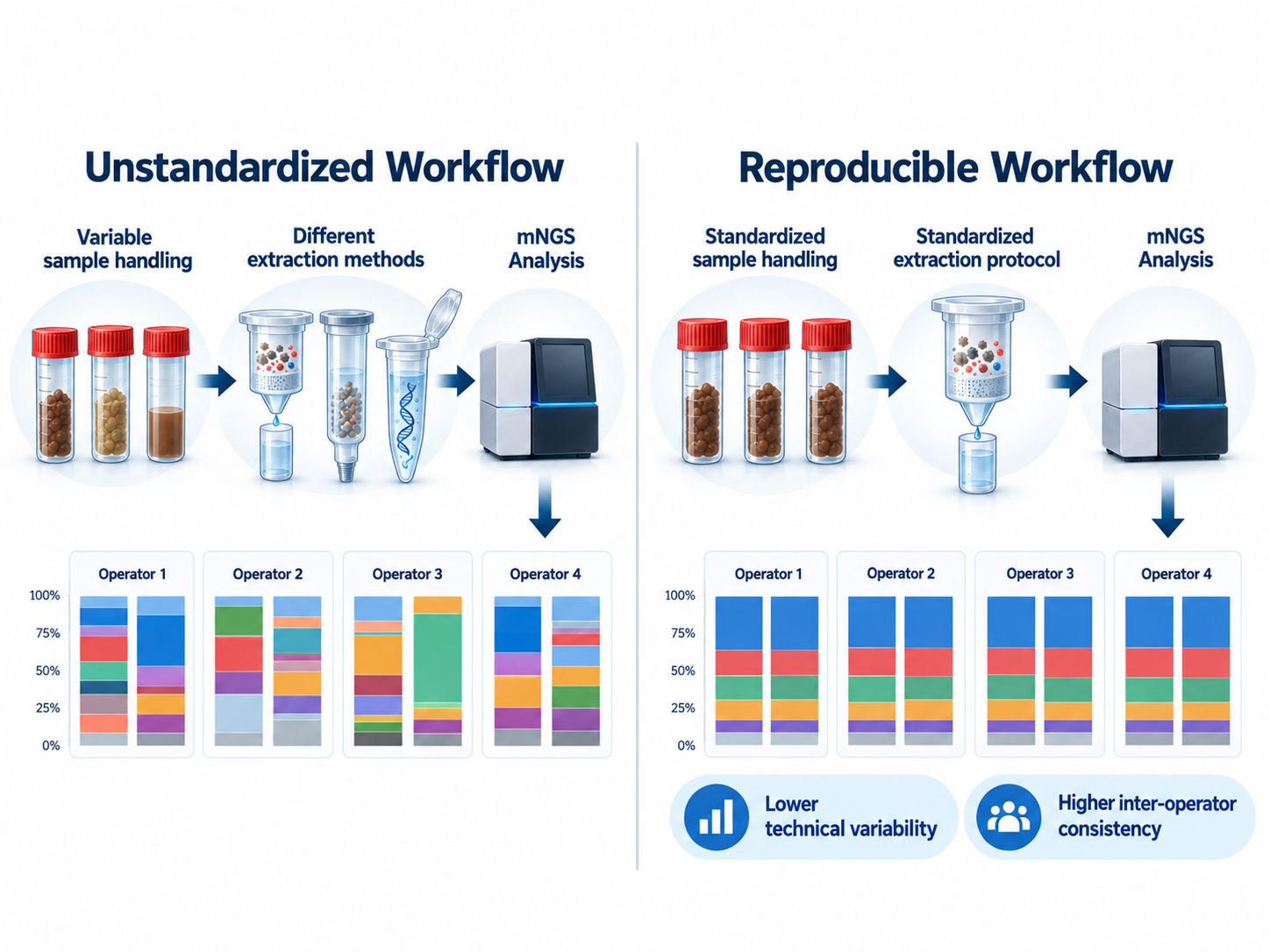
For the extraction workflow, the study reported that the optimized automated method produced species-abundance profiles that were highly correlated with the manual comparator method (R² > 0.998). Inter-operator reproducibility was also high (R² > 0.99).
The findings reinforce a broader point for microbiome laboratories: reproducibility depends on the entire sample-to-data workflow, not only on sequencing performance.
Unstandardized Workflow vs Reproducible Workflow
Implications for microbiome sample preparation
For researchers working with fecal and other complex microbiome samples, a robust workflow should consider:
- consistent sample preservation and handling;
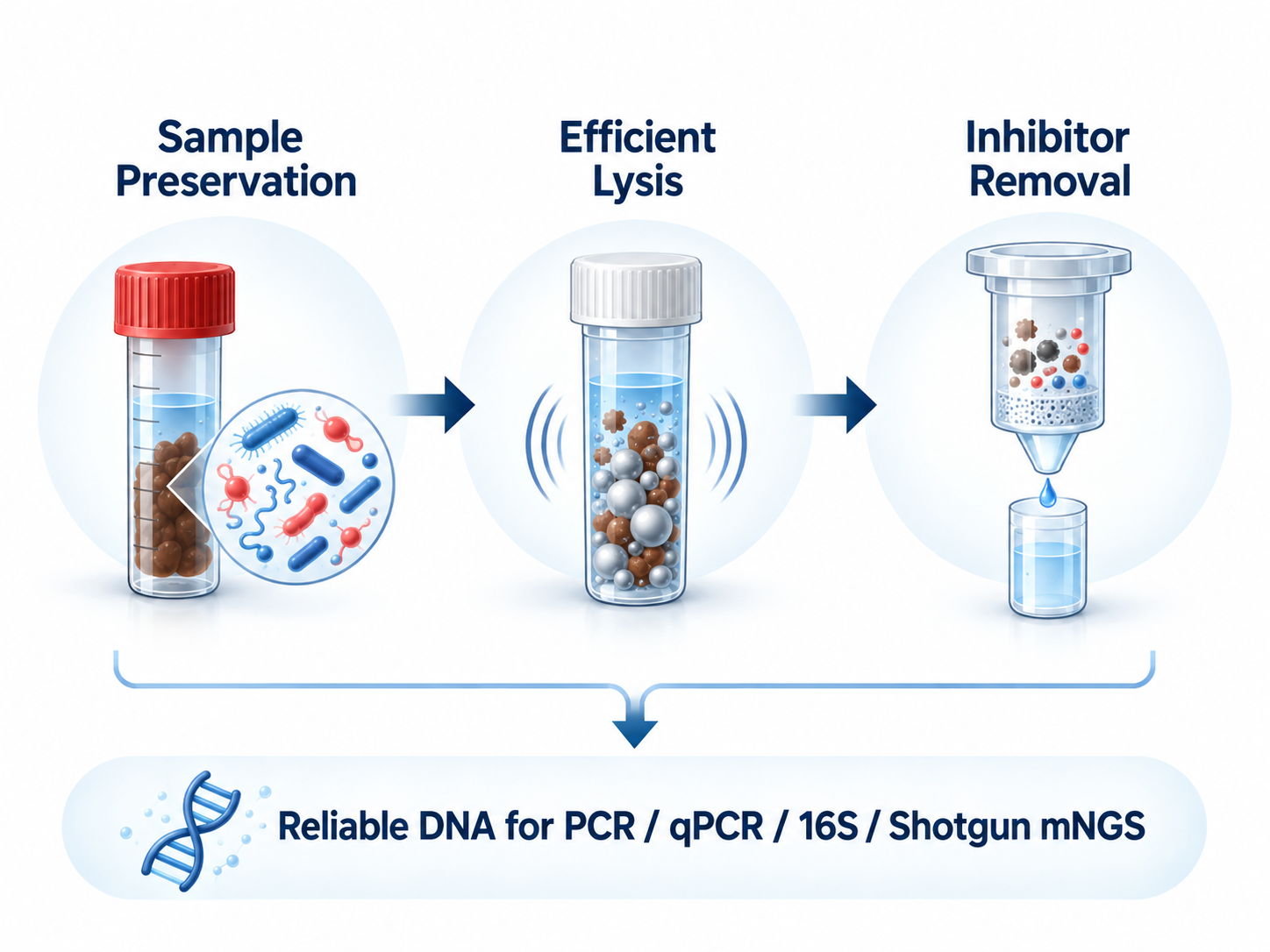
- effective mechanical or chemical lysis across diverse microorganisms;
- removal of inhibitors that may interfere with downstream analysis;
- reproducible DNA extraction across operators and batches; and
- workflow compatibility with PCR, qPCR, 16S/ITS sequencing and shotgun metagenomics.
Standardizing these steps can help improve the comparability of results across experiments, laboratories and larger multi-site studies.
Sample Preservation → Efficient Lysis → Inhibitor Removal
Supporting reproducible microbiome workflows
MP Biomedicals provides sample preparation and nucleic acid extraction solutions designed for challenging biological and environmental samples. Researchers looking to improve microbiome workflow consistency can also explore our related resources:
- Expert Tips and Solutions to Advance Your Gut Microbiome and Colitis Research
- Enhancing DNA Extraction Techniques for Human Microbiome Research
- Microbiome DNA Extraction & Automation
Looking to optimize your microbiome sample preparation workflow? Explore MP Biomedicals solutions or speak with our technical team to identify an approach suited to your sample type and downstream application.
Source
Zheng Y, Wanghu H, Xia Z, et al. Evaluation and validation of a reproducible mNGS workflow for gut Microbiome analysis. Scientific Reports. Published 11 October 2026. DOI: 10.1038/s41598-026-70557-8.
Related Video
Related video: MP Biomedicals, “Enhancing DNA Extraction Techniques for Human Microbiome Research: Pro-Tips for Optimal Results.”
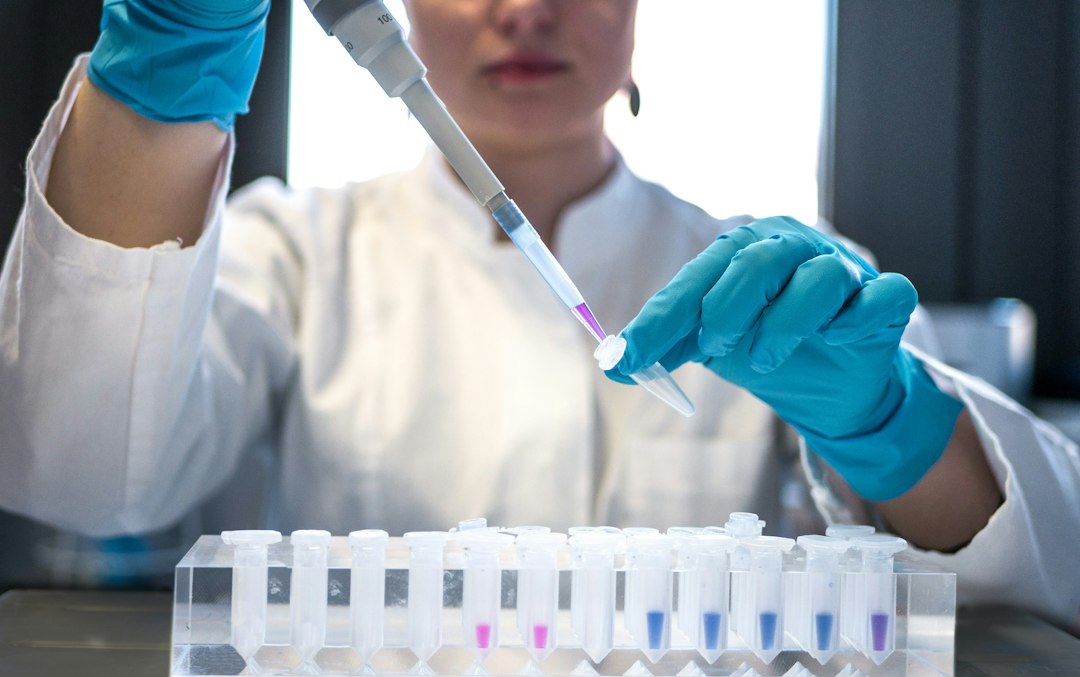
Featured image: Photo by Julia Koblitz via Unsplash. Used under the Unsplash License.
Move Your Research Workflow Forward
Explore relevant MP Biomedicals solutions or connect with our team for product selection, samples, quotations and technical guidance.