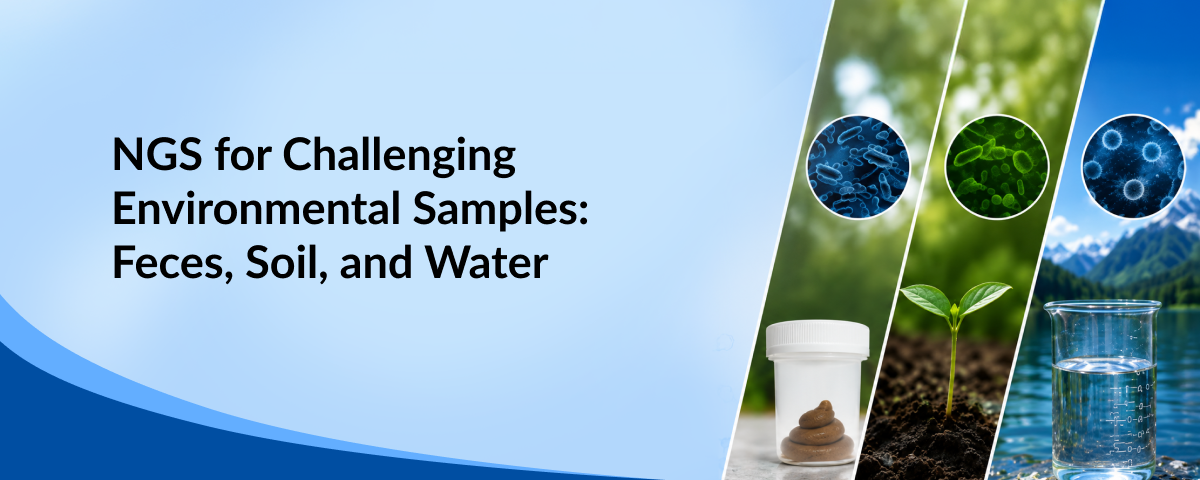
For next-generation sequencing (NGS), the central question is not simply whether DNA can be extracted, but whether the extracted DNA accurately represents the original community.
NGS on feces, soil, and water faces common hurdles: variable biomass, inhibitors, degradation, and strong protocol-dependent bias, especially in DNA extraction and preservation [1].
A good NGS workflow starts with the biological reality of the sample rather than the sequencing platform. In practice, that means matching collection, transport, and extraction to the expected biomass level and inhibitor load before thinking about library prep. A clear, fit-for-purpose workflow from field to library prep supports more robust, comparable data.
What these samples share is that a generic, one-size-fits-all workflow will fail at least one of them. A protocol optimized for feces will typically underperform on inhibitor-heavy soil; a workflow calibrated for high-biomass samples will miss rare taxa in dilute water. For NGS specifically, these failures are compounding. Poor DNA quality at extraction propagates through library prep, affects sequencing depth distribution, and ultimately biases diversity estimates and functional inferences.
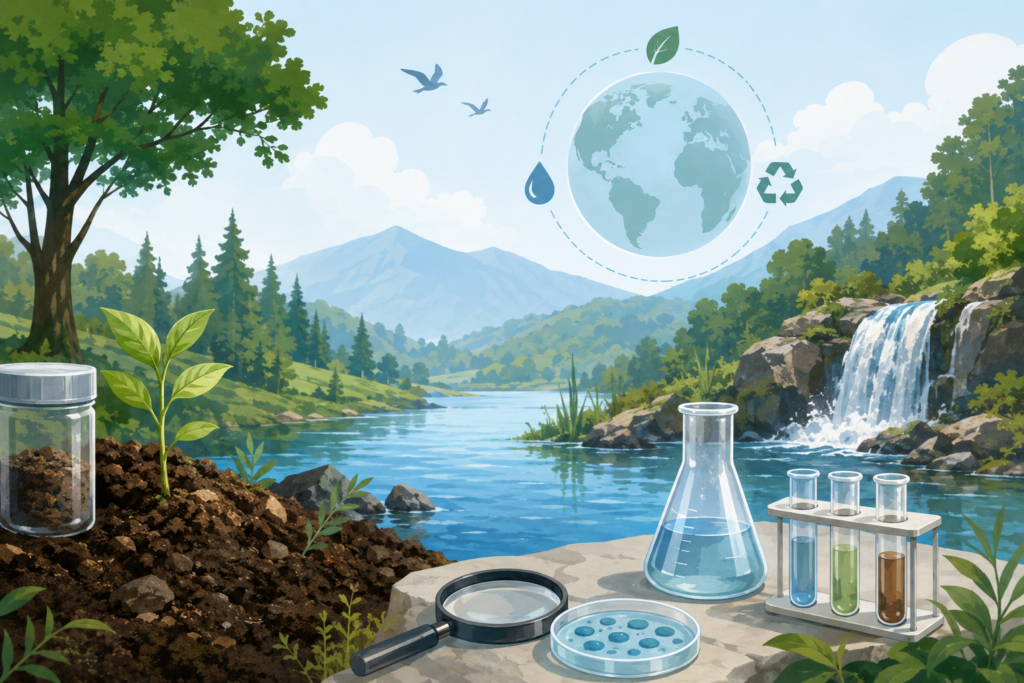
The goal of NGS depends on the sample type. In feces, researchers often want to profile the gut microbiome, study antibiotic resistance genes, or link microbial patterns to host traits [1]. In soil, the focus is usually on microbial diversity, ecosystem function, land-use effects, and functional genes related to nutrient cycling. In water, NGS is often used to detect pathogens, indicator organisms, or antibiotic resistance genes.[5]
| Sample type | NGS Goal | Main challenge | Issue | Recommended Workflow Step |
| Feces | Gut microbiome profiling, resistome analysis, phenotype association | Storage sensitivity | Community shifts before extraction [4] | Immediate freezing or validated preservative, consistent handling |
| Soil | Microbial diversity, ecosystem function, land-use impacts, functional genes | Inhibitors and heterogeneity | Poor PCR performance, uneven recovery, inconsistent profiles | Careful sampling design, inhibitor removal, optimized extraction |
| Water | Pathogen/indicator detection, ARG monitoring | Low biomass and contamination | Background DNA overwhelms signal [3] | Filtration or concentration, blanks, strict clean workflow |

Each sample type requires specific attention at three stages: collection, nucleic acid isolation, and QC. The choices made at each step carry forward into sequencing quality and the reliability of downstream analysis.
Sample Collection: Collection strategy varies considerably by matrix. Water samples from low-biomass sources such as drinking water typically require filtration of large volumes, often 100 to 2,000 liters to concentrate enough biomass for detection [3]. Soil sampling needs to account for depth, since microbial diversity and functional potential shift meaningfully across intervals like 3 cm, 12 cm, and 30 cm [4]. Fecal samples for microbiota analysis should be collected using standardized procedures with documentation of key factors that influence microbial composition, such as age, antibiotic use, medications, diet, and lifestyle [6]. Across all three matrices, preserving DNA integrity from the moment of collection is key. Immediate freezing at −80°C is preferred, though validated preservation solutions can stabilize samples during transport when freezing isn’t possible.
Explore preservation solutions designed for environmental NGS workflows →
Nucleic Acid Isolation: The goal is high-quality, pure nucleic acids. Protocols may require troubleshooting and adjustment based on the target (e.g., bacteria vs. viruses) and the sample source [5]. For shotgun metagenomics, extraction methods must yield HMW DNA (ideally fragments of 15,000 to 20,000 bp). These fragments are later broken into constant-sized pieces for library preparation; if the DNA is already degraded, it can bias the diversity observed in the results.
Browse extraction kits validated for environmental metagenomics →
Sample Quality Control: Quantitation matters here. A Qubit fluorometer is well suited for sensitive DNA quantitation, while an Agilent Bioanalyzer or TapeStation can verify fragment size before sequencing [5].
Regardless of the sequencing strategy chosen, input DNA quality remains the common bottleneck. The sequencing platform does not correct for what was lost or damaged upstream; it amplifies the consequences. Selecting the right preservation method and extraction kit for your sample matrix is the foundation on which reliable sequencing data is built.
Ready to achieve the same sequencing confidence in your NGS studies?
Explore the MP Biomedicals’ full range of environmental solutions.